The Word Decides
Let me describe one person twice. The first is a woman in her forties, a mother of three children and a nurse with a bad back from lifting patients for twenty years. She has been prescribed opiates in the past but now is using medical cannabis in the evening which allows her to sleep well, work with
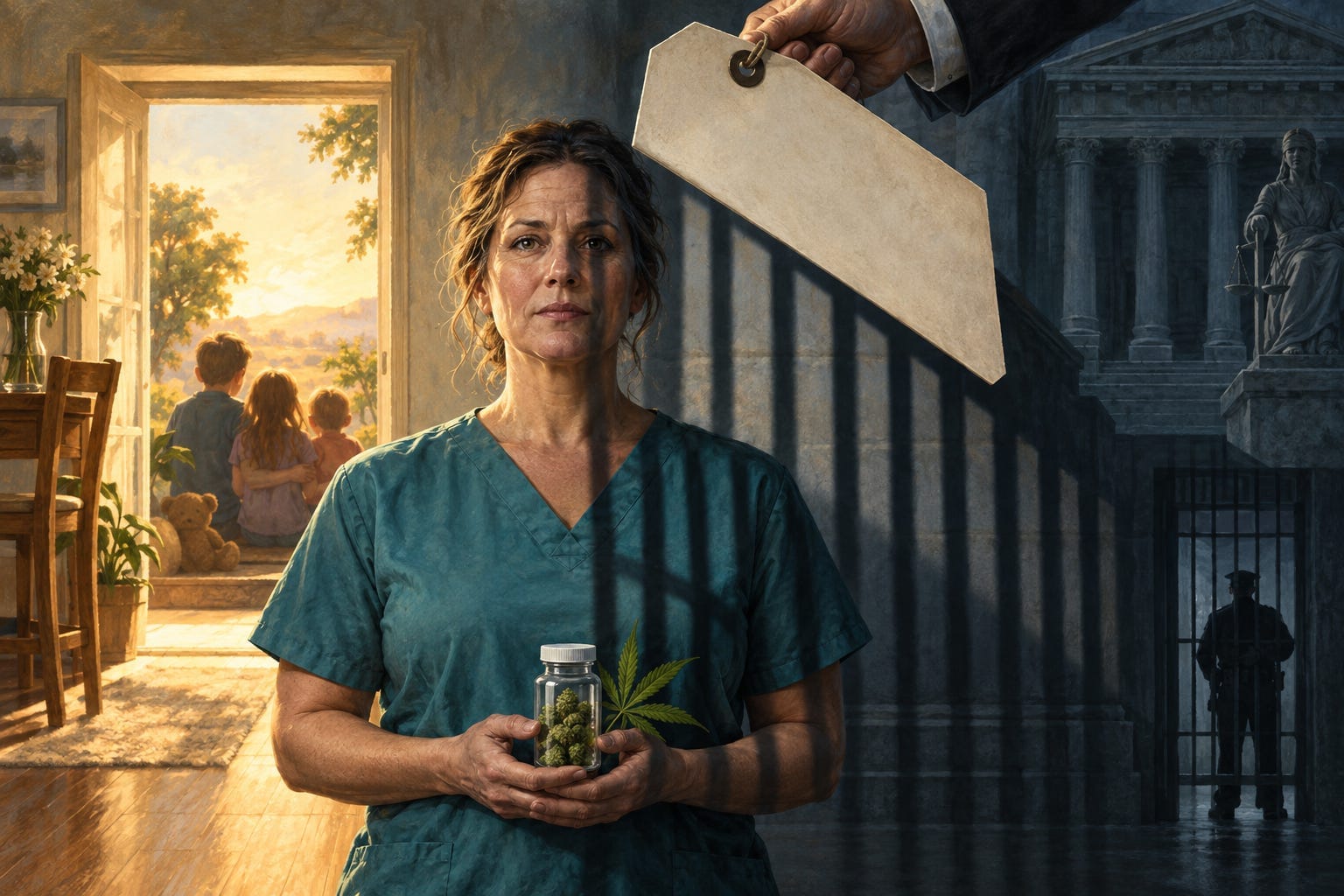
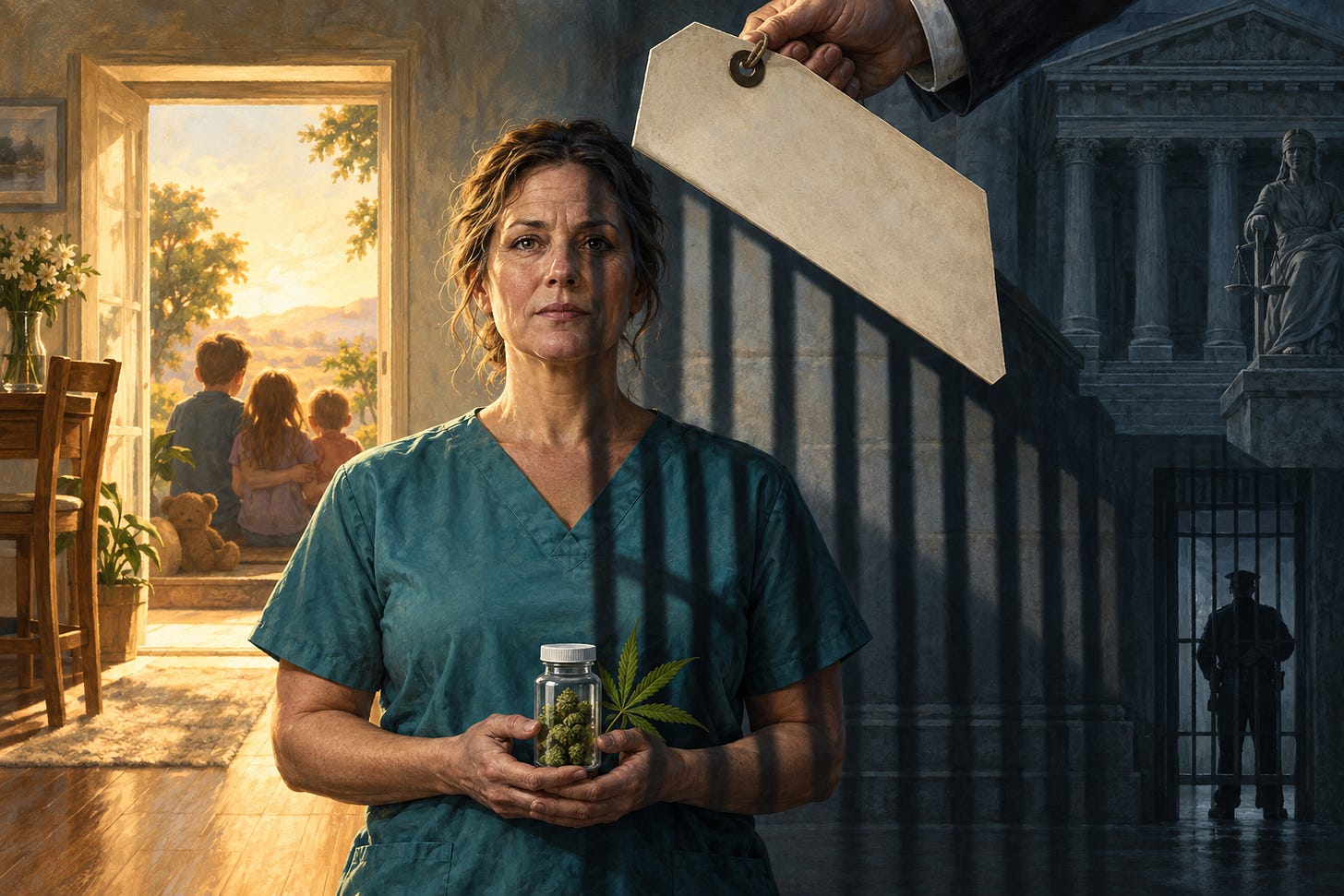
Let me describe one person twice. The first is a woman in her forties, a mother of three children and a nurse with a bad back from lifting patients for twenty years. She has been prescribed opiates in the past but now is using medical cannabis in the evening which allows her to sleep well, work with less pain and causes less constipation. The medical record documents this and so far she has not tested positive on a “random” roadside drug test.
Walker Briefing is a reader-supported publication. To receive new posts and support my work, consider becoming a free or paid subscriber.
The second time we see the same woman, same evening dose, same results, and she is using cannabis medically, but has not been prescribed by a doctor. Her file says she is a drug user.
All that has changed in her life is a word, and that word changes everything. On prescribed medication, assuming she remains untested at the roadside, she keeps her job, her licence and her children. A drug user gets stood down after a random test, loses income, loses a sense of security, and may end up in the family court where the words “drug user” may be heard as an accusation. I have sat across from both versions of this person and the only difference, the only thing that ever changed, was the choice of word which somebody wrote down.
You know me, of course, and know that I stand in both worlds of politician and medical practitioner. Should I say “trust me, I am a doctor” or should I say “trust me, I am a politician”? In fact I would say do not trust what is said, always check and reassure yourself that the words are true. Can we agree on that?
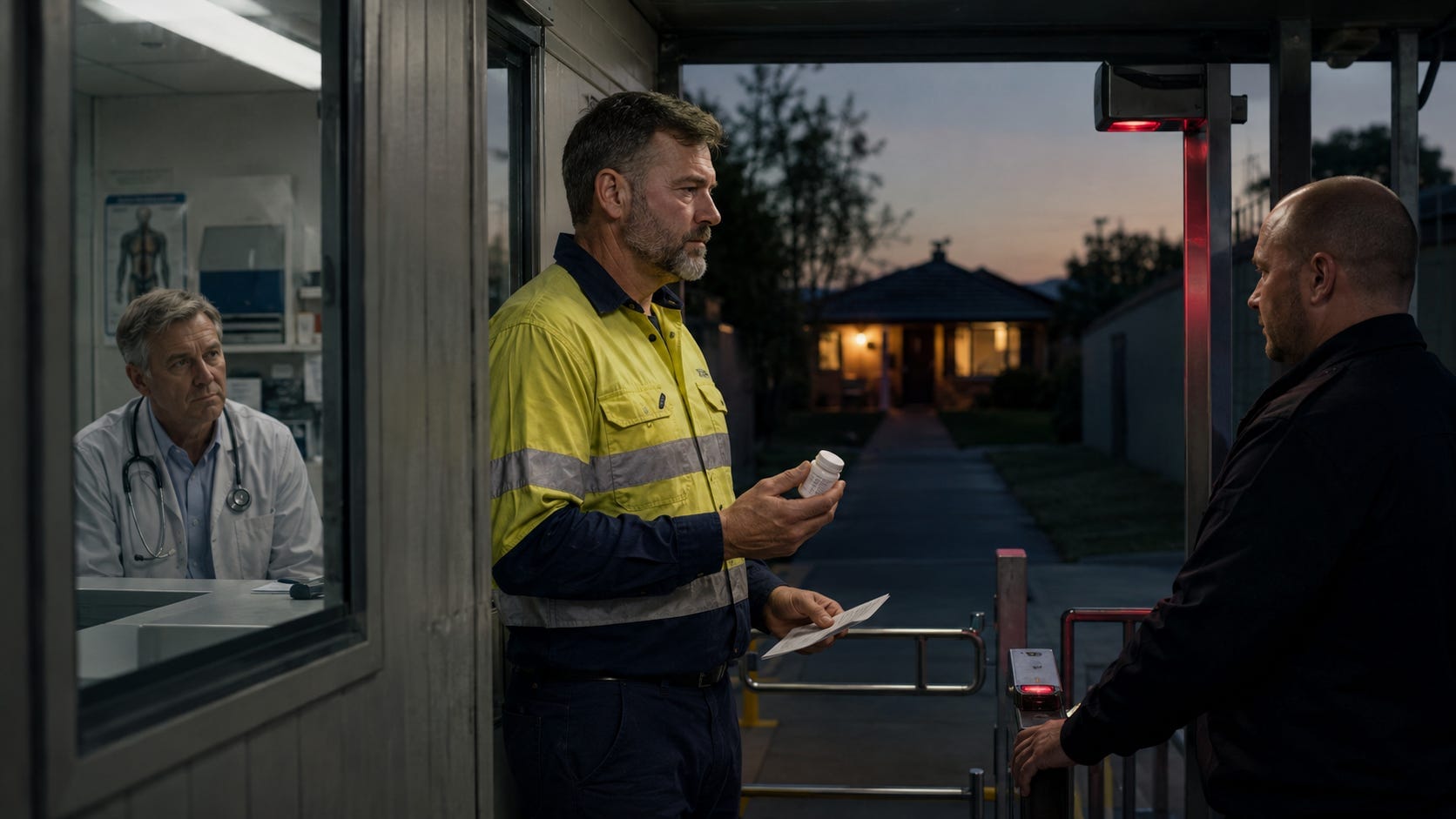
Doctors are trained to be careful with words. We use a foreign language and often must translate what has been written by a specialist into what a layperson can understand. A diagnosis is not just a word, it has a profound meaning at times. In earlier centuries the word “tuberculosis” automatically meant a short life and that word was feared. In the 1980s in Germany we were for a while not allowed to simply request a blood check without psychological consultation because in a time of the newly discovered HIV virus there was a possibility that a result might indicate an infection which might be HIV (note the word “might”?) and the patient might kill themselves. Despite great progress in managing cancers, simply throwing that word in the face of someone in front of you will certainly provoke many kinds of reaction, most of them unhelpful. And for a non-medical example, the recent Centrelink Robodebt scandal placed some individuals in the situation of owing $7,000, far beyond their ability to pay. Suicides followed, even though after time the scheme was found to be unlawful and the debt word with it. Too late. Sorry.
Words matter. Words can kill. A diagnostic word is important not just because it sounds right, but also because there are consequences that flow from a word. A diagnosis of congestive cardiac failure is earned: history, examination, laboratory results, functional tests, and then the word. The word demands a consequence but what if the upstream cause for the diagnosis is myocarditis and not coronary artery disease? Yes, the treatment is different, and if the word is wrong then you strike it out. Being treated on the basis of an incorrect diagnosis results in a worsening of the illness. Now that example, taken from a medical practitioner, should be mapped across to the world of a politician. That is the measure to be held against the legislation we pass that gets transformed into law. A law can be reframed as a word with a consequence attached.
Take the word that governs cannabis. “Narcotic” is from the Greek for stupor, and any pharmacist or medical practitioner will tell you it refers to suppression of part of the brain stem that deals with respiration. Usually we mean opiates or barbiturates, but basically any drug that puts you to sleep and reduces your breathing. The treaty that runs the world’s drug laws is called the Single Convention on Narcotic Drugs. Being created by politicians and lawyers, it never defines the word medically. It defines “drug” as anything on its own list, and the list as the list of drugs, and a drug is what the list says is a drug. The treaty’s opening line correctly calls addiction “a serious evil for the individual”, and then two lines later says the same drugs are “indispensable for the relief of pain and suffering”. In effect, the word narcotic has been redefined as a controlled drug, and both sentences are about the same substances.
Now come home. Western Australia’s Misuse of Drugs Act, the law under which five thousand people a year are charged with possession, does not contain the word “narcotic” at all. Not once. It borrows its list from another list. The national Poisons Standard, which sorts every substance in the country into schedules, has two headings that matter here. Schedule 8 is called “Controlled Drug”: a substance which “should be available for use” under restriction. Schedule 9 is called “Prohibited Substance”: one which “should be prohibited by law”. Since 2016 cannabis has been in both lists. With a prescription and a licensed grower it is a controlled drug and without a prescription and licensed grower it is defined as a prohibited substance. And there is one more word. Under Western Australia’s road law, THC, even when a doctor has prescribed it and a licensed grower has grown it, is a “prescribed illicit drug”. Read that phrase again. The “prescribed” in it does not mean prescribed by a doctor. It means listed in a regulation. One word, two opposite meanings, and the second cancels the first at the roadside. Same plant, same molecule, same evening dose and the word changes at the pharmacy door. The Commonwealth law that licenses growers is still called the Narcotic Drugs Act.
So where did the word come from, if not from the plant? Not from here. Cannabis was banned in Australia in 1926 because London asked Canberra to, after a conference in Geneva. The official history is clear: cannabis “was not a problem” in this country and there was “little domestic agitation” for a ban. Western Australia got round to it in 1950. The word arrived with no scientific case at all behind it. The case, such as it was, had been made in America a decade earlier by Harry Anslinger, the first head of its narcotics bureau, who told Congress in 1937 that “we seem to have adopted the Mexican terminology, and we call it marihuana”. The old American statutes had called the plant cannabis but he chose the foreign word. His private files, which historians have since read, show what he thought of the people he associated it with, and his public campaign was pitched at the fear of what the plant would do to white children. Read it for yourself if you wish. What is not in dispute is that a foreign word, chosen because it was foreign, crossed two oceans and became the law in Perth without anyone here needing a reason.
And words, once they are law, do the punishing on their own. Fifteen years ago more than five hundred doctors and clinicians at two conferences were handed a case history of a man with a drinking and drug problem. Half were told he was a “substance abuser”. The other half were told he had a “substance use disorder”. Same man, same history, one word changed. The group that read “abuser” wanted him punished; they were significantly more likely to agree that he should be sent to jail “to serve as a wake-up call”. These were professionals but do you see the power of the word? In this country eight in ten people using cannabis as a medicine say they worry about arrest. Half could not find a doctor willing to prescribe. Seven in ten pharmacists admit there is a stigma on the product they are handing over the counter. Stigma. A word that is loaded with meaning. It is not just a feeling, but the freight the word carries after evidence, however scanty, has gone. You can read my thoughts on this in earlier posts on Substack, but the bottom line is that the word was in charge each time a decision was taken.
You doubt that a word can hold a law up for decades after everyone knows better? This State has already run the experiment.
Until 1990, Western Australia’s Criminal Code had a section headed “Unnatural offences”. Sex between two men was carnal knowledge “against the order of nature”, and the penalty was fourteen years’ imprisonment with hard labour, “with or without whipping”. The Act that finally removed the crime, in 1989, could not bring itself to remove the word. Its preamble declares that “the Parliament disapproves of sexual relations between persons of the same sex”, and it made it unlawful to “promote or encourage homosexual behaviour” in any school. It also kept the age of consent for men at twenty-one while everyone else’s was sixteen, and that stayed on the books until 2002. In 2018 Parliament passed an Act to expunge the convictions. Count the words. “Unnatural offence.” “Sodomy.” “Lesbian and gay law reform.” “Historical homosexual convictions.” Four words in thirty years, and the law limped a few years behind each one. Nobody’s body changed in that time. The evidence had been in for decades. Only the word moved, and when it moved the law followed, grudgingly and late, with a preamble still complaining.
There we have the pattern, and now you will be able to see it in many other places.
A man sleeping in a doorway in Perth in 1990 was, in the words of the Police Act, a person “wandering abroad” with “no visible lawful means of support”. A vagrant. The offence was the person. In 2004 the vagrancy sections went and the word became “disorderly”: the offence was now a behaviour. Today he gets a “notice to leave” from a council or a move-on order from a constable, and the word is “camping”. None of these words is “a person who needs a home”, and that matters, because when Perth’s own Housing First project used that word, eight in ten of the people it housed were still housed a year later and their trips to emergency departments fell by half. The word “vagrant” produced a cell. The word “tenant” produced a tenant.
Consider what happens when a large company pays less tax than it might. There are three words for that single act: evasion, avoidance, minimisation. The first is a crime. The second is caught by an anti-avoidance law only if the “sole or dominant purpose” was the tax benefit. The third is described in the Government’s own guidance as the use of concessions “in accordance with Parliament’s intention”. Same act, three words, and the word decides whether anyone knocks on the door. Last year twenty-eight per cent of the country’s largest companies paid no income tax at all, and the Tax Office says nearly all of it was lawful. It is. The word “concession” made it so. The Treasury has a plainer word for a concession in its own accounts: it calls it a “tax expenditure”, money the State chose to spend by not collecting it, and the five largest come to about one hundred and forty-five billion dollars a year. Say “concession” and it is a right. Say “expenditure” and it is a spending decision nobody votes on each year.
And consider the word “royalty”, which is what we call the money a company pays for taking gas out of the sea off our coast. It is the Crown’s word. It describes the King’s due, not the owner’s share. Last year Australia sold sixty-five billion dollars of liquefied gas and collected one point four billion in the tax designed for it, and the Treasurer has said on the record that most projects are “not expected to pay any significant amounts” until the 2030s. In 2023, on the same volume, Qatar’s government took fifty-six billion dollars from its gas and ours took about eleven, partly because Qatar owns half of what it sells. Beyond three miles from the beach the gas is the Commonwealth’s to tax, not ours, so I will not pretend Perth could fix this alone. But Western Australia’s own share from the North West Shelf has fallen from one point three billion dollars a few years ago to a few hundred million now, and the fund this State set up in 2012 to keep a sliver of its royalties for the future was renamed in 2020. It is now a health research fund. Norway’s fund, built on the same idea and a different word, holds twenty thousand billion kroner. We did not lose the money. We lost the word “sovereign”, and then we lost the word “future”, and the money followed the words out the door.
Here, then, is the test. It is a doctor’s test and it works on any law. Who chose the word? What does the word carry that the evidence does not? Who does the word punish? And who would have to change it? Ask those four questions of any statute and you will learn more about the State than a year of question time will tell you. Cannabis is the cleanest case I know, because all four answers are on the public record: a foreign word, chosen because it was foreign, carrying a judgement no chemist would sign, punishing five thousand people a year in this State, and changeable by the same Parliament that adopted it without a reason. Next week I will ask the four questions of the people who profit from keeping the word. After that, of the State itself.
There is a Bill before the Legislative Council in my name, and its title is the whole argument: the Misuse of Drugs Amendment (Lawful Personal Use of Cannabis) Bill. It changes the word. Fifty grams, six plants, a gift between adults, children protected, and a judge allowed not to call someone a trafficker when that would be plainly unjust. In 2024 the same Bill was defeated after one member of the Government spoke against it for a couple of short paragraphs. I brought it back in March. It has sat on the notice paper since.
The word is in front of the House. The Government can adopt it, or it could stand up and explain why the old one is worth another year of five thousand charges.
Walker Briefing is a reader-supported publication. To receive new posts and support my work, consider becoming a free or paid subscriber.